Computation-Efficient Era: A Comprehensive Survey of State Space Models in Medical Image Analysis

✨ arXiv preprint, 2024 ✨

Moein Heidari, Sina Ghorbani Kolahi, Sanaz Karimijafarbigloo, Bobby Azad, Afshin Bozorgpour, Soheila Hatami, Reza Azad, Ali Diba, Ulas Bagci, Dorit Merhof
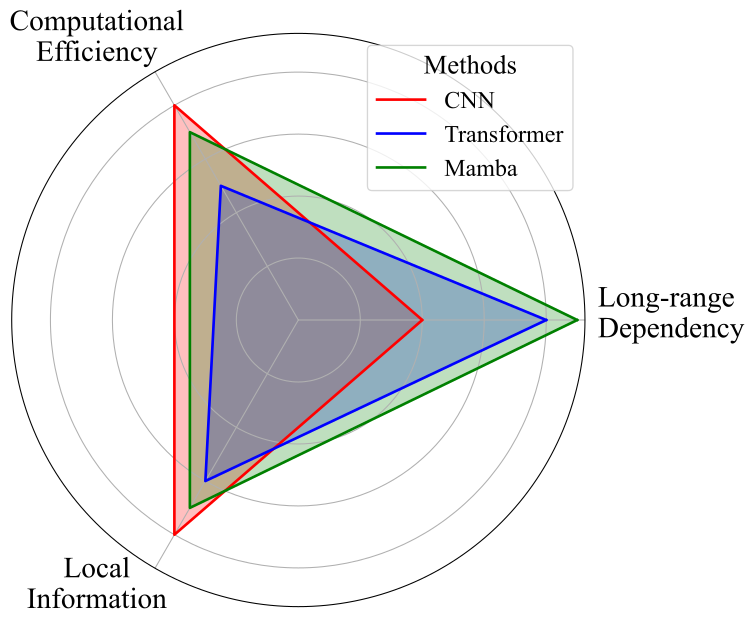
Algorithms and methods trilemma. Despite CNN’s ability to efficiently process local information with high computational
Figure 1. Algorithms and methods trilemma. Despite CNN’s ability to efficiently process local information with high computational efficiency, they often struggle with capturing long-range dependencies due to their inherent architectural constraints. On the other hand, transformers excel at capturing long-range dependencies and have demonstrated high performance in various tasks. However, they are computationally expensive and potentially inefficient when processing local information. The Mamba model emerges as a promising alternative by balancing these trade-offs. It offers a method that maintains computational efficiency while effectively capturing local information and long-range dependencies.

Abstract

Sequence modeling plays a vital role across various domains, with recurrent neural networks being historically the predominant method of performing these tasks. However, the emergence of transformers has altered this paradigm due to their superior performance. Built upon these advances, transformers have conjoined CNNs as two leading foundational models for learning visual representations. However, transformers are hindered by the O(N²) complexity of their attention mechanisms, while CNNs lack global receptive fields and dynamic weight allocation. State Space Models (SSMs), specifically the Mamba model with selection mechanisms and hardware-aware architecture, have garnered immense interest lately in sequential modeling and visual representation learning, challenging the dominance of transformers by providing infinite context lengths and offering substantial efficiency maintaining linear complexity in the input sequence. Capitalizing on the advances in computer vision, medical imaging has heralded a new epoch with Mamba models. Intending to help researchers navigate the surge, this survey seeks to offer an encyclopedic review of Mamba models in medical imaging. Specifically, we start with a comprehensive theoretical review forming the basis of SSMs, including Mamba architecture and its alternatives for sequence modeling paradigms in this context. Next, we offer a structured classification of Mamba models in the medical field and introduce a diverse categorization scheme based on their application, imaging modalities, and targeted organs. Finally, we summarize key challenges, discuss different future research directions of the SSMs in the medical domain, and propose several directions to fulfill the demands of this field. In addition, we have compiled the studies discussed in this paper along with their open-source implementations on our GitHub repository.
Introduction

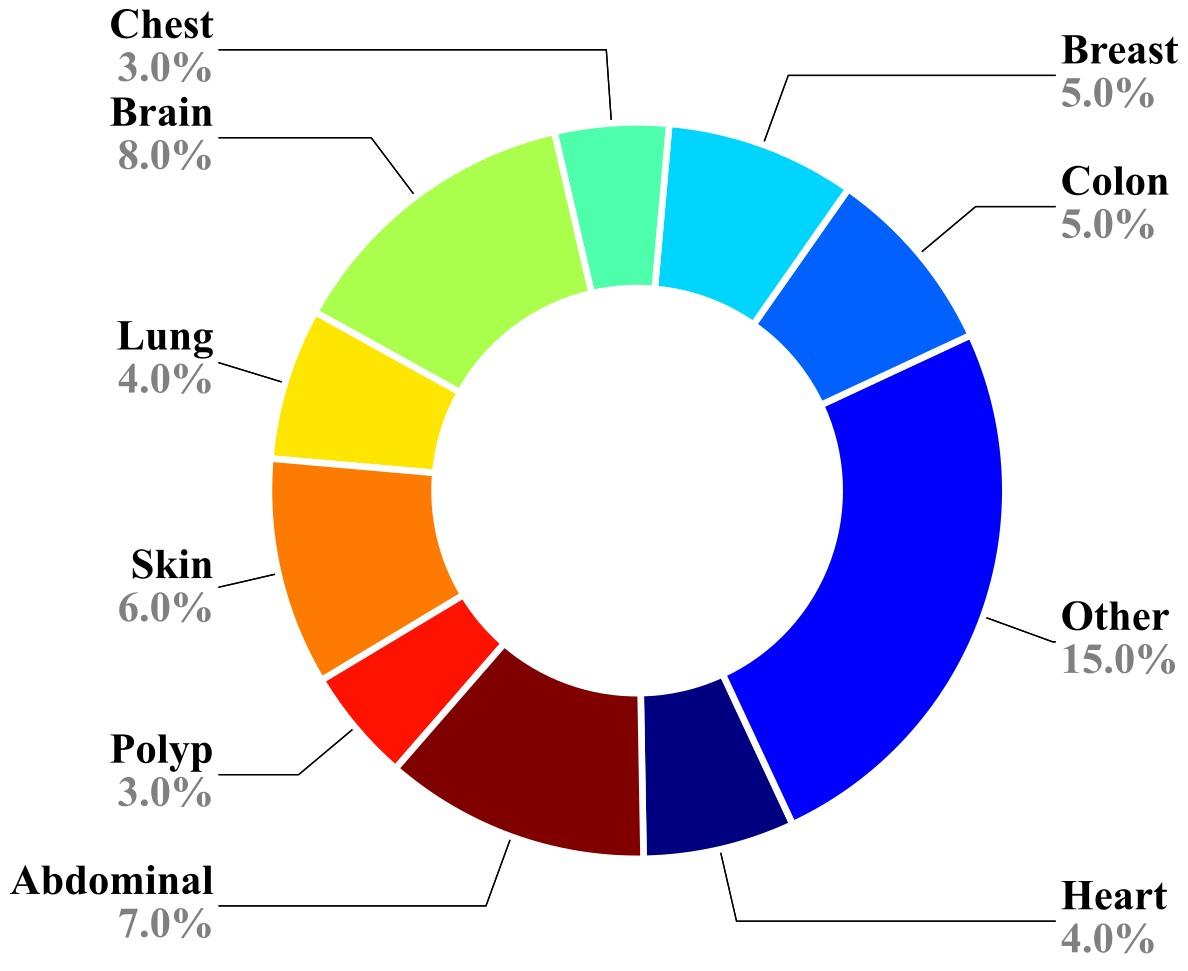
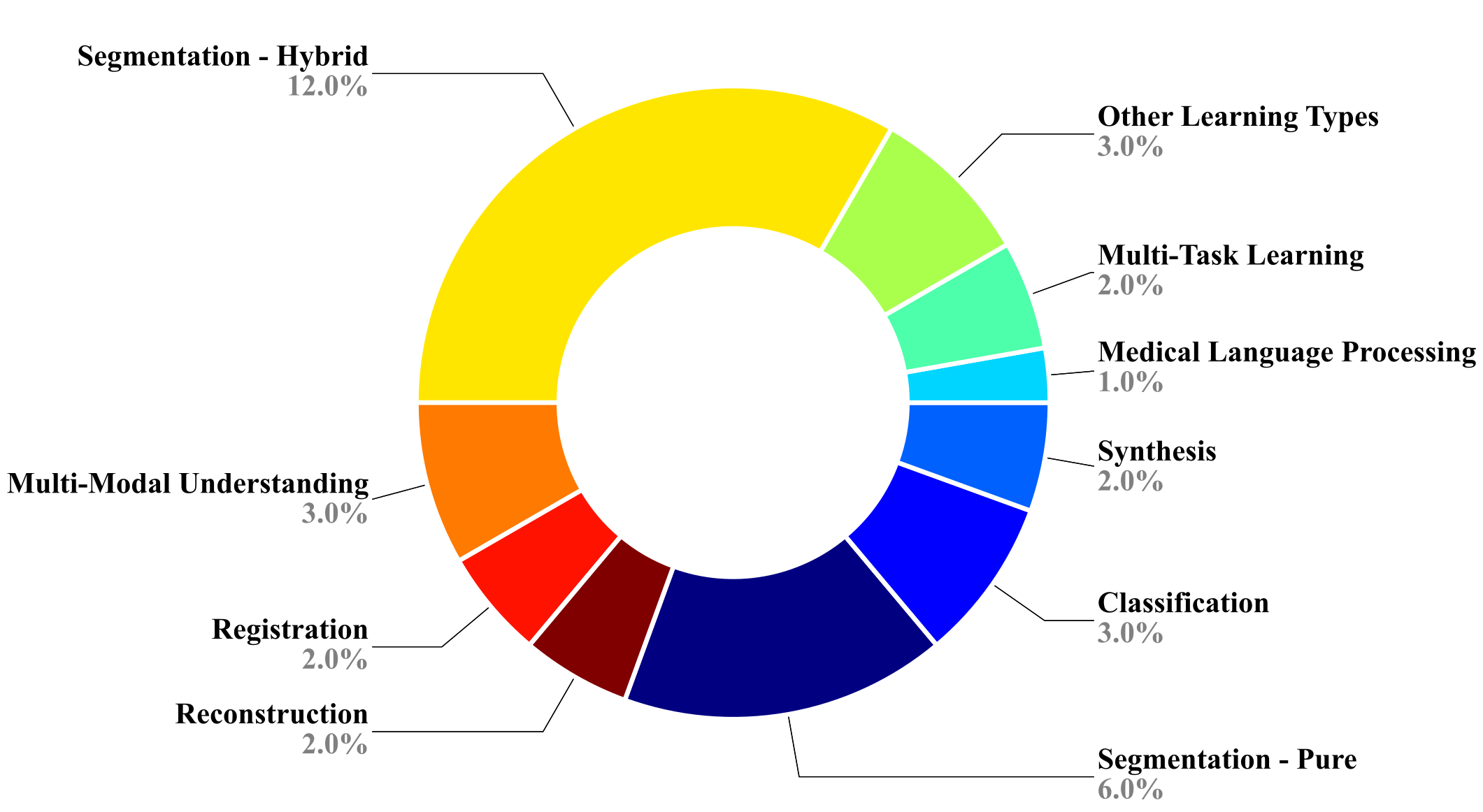
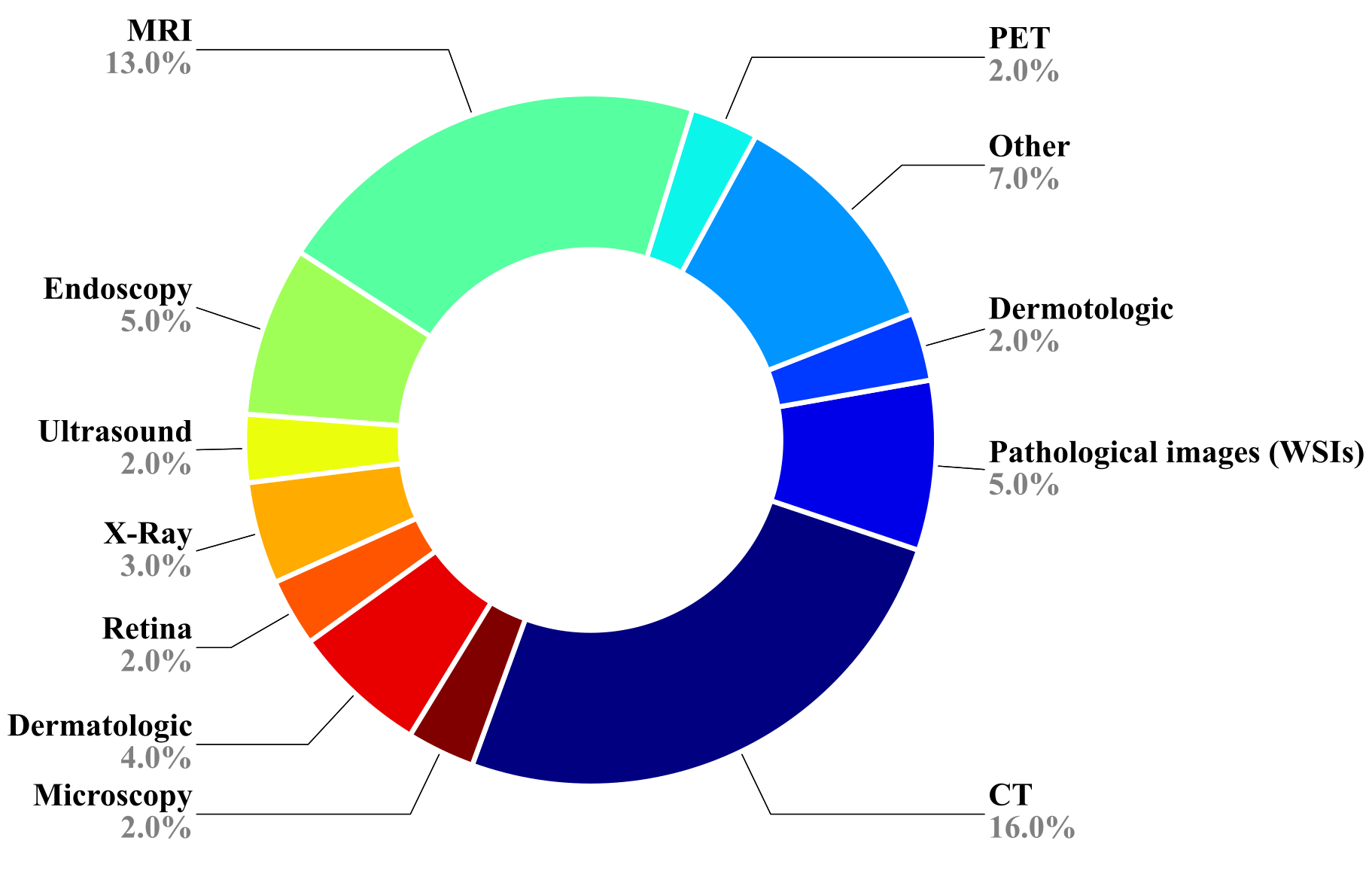
Figure 2. The diagram illustrates the distribution of the analyzed papers, categorized as follows: (a) by their applications, (b) by their imaging modalities, and (c) by the type of organ studied.

State Space Models in Action

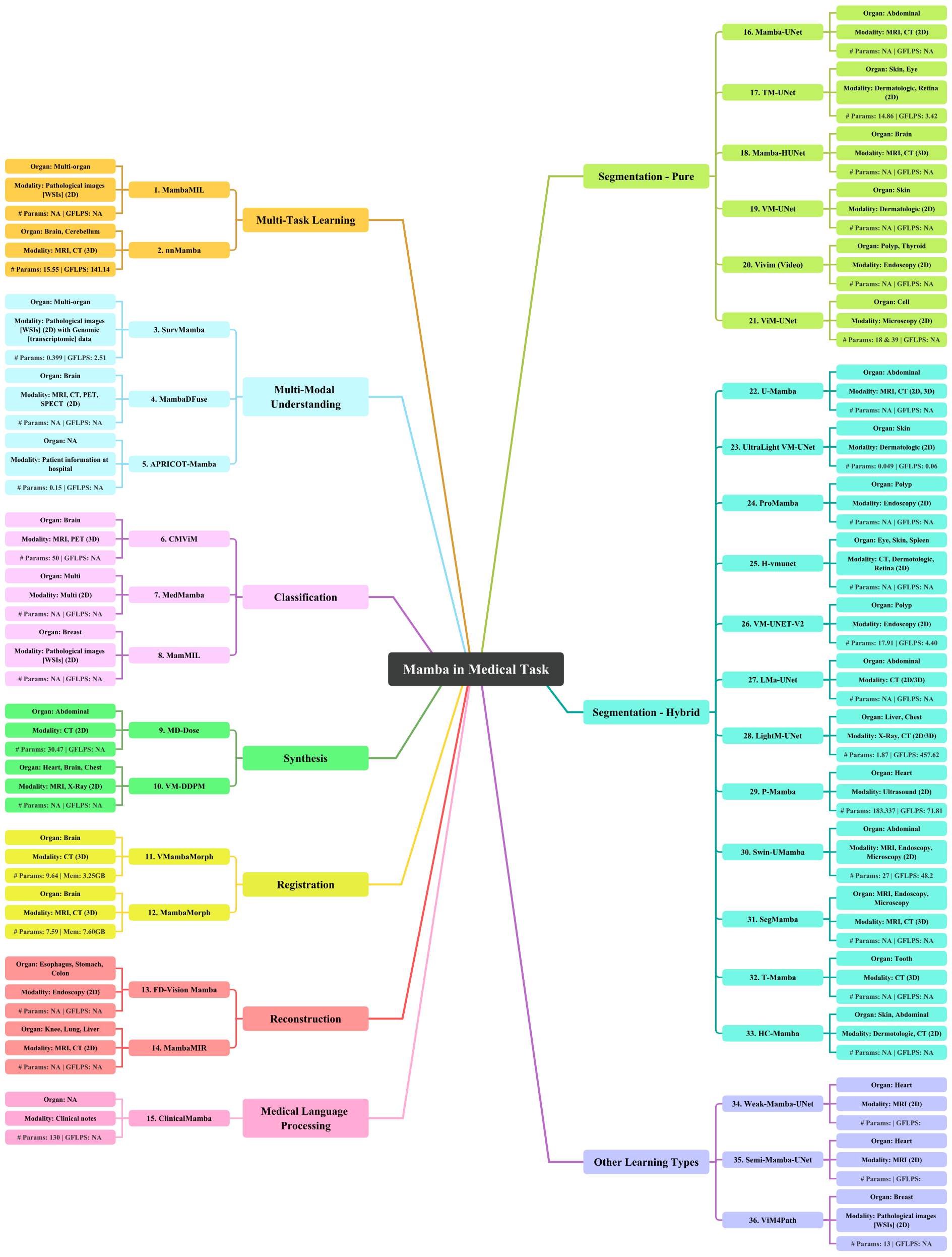
The proposed taxonomy for Mamba-based medical imaging research encompasses ten sub-fields: I) Multi-Task Learning, II) M
Figure 6. The proposed taxonomy for Mamba-based medical imaging research encompasses ten sub-fields: I) Multi-Task Learning, II) Multi-Modal Understanding, III) Medical Image Classification, IV) Medical Image Synthesis, V) Medical Image Registration, VI) Medical Image Reconstruction, VII) Medical Language Processing, and Medical Image Segmentation, which is subsequently divided into VIII) Pure, IX) Hybrid and X) Multi-disciplinary learning methods, referred to as other learning types. For conciseness, we use ascending prefix numbers in the paper’s title and denote the reference for each study accordingly: 1.[90], 2.[91], 3.[92], 4.[93], 5.[94], 6.[95], 7.[96], 8.[97], 9. [98], 10. [99], 11.[100], 12.[101], 13.[102], 14.[103], 15.[104], 16.[105], 17.[106], 18.[107], 19.[108], 20.[87], 21.[109], 22.[33], 23.[28], 24.[110], 25.[111], 26.[112], 27.[113], 28.[114], 29.[115], 30.[116], 31.[117], 32.[118], 33.[119] 34.[120], 35.[121], 36.[122].
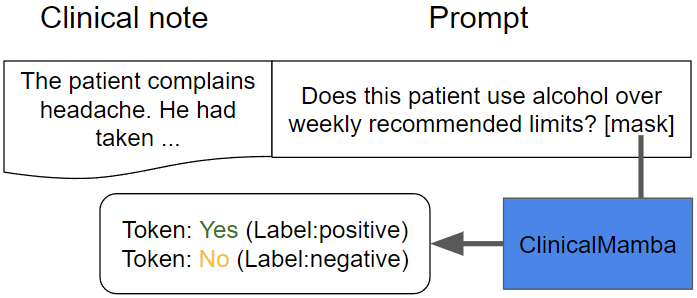
Prompt-based fine-tuning [104]
Figure 10. Prompt-based fine-tuning [104]
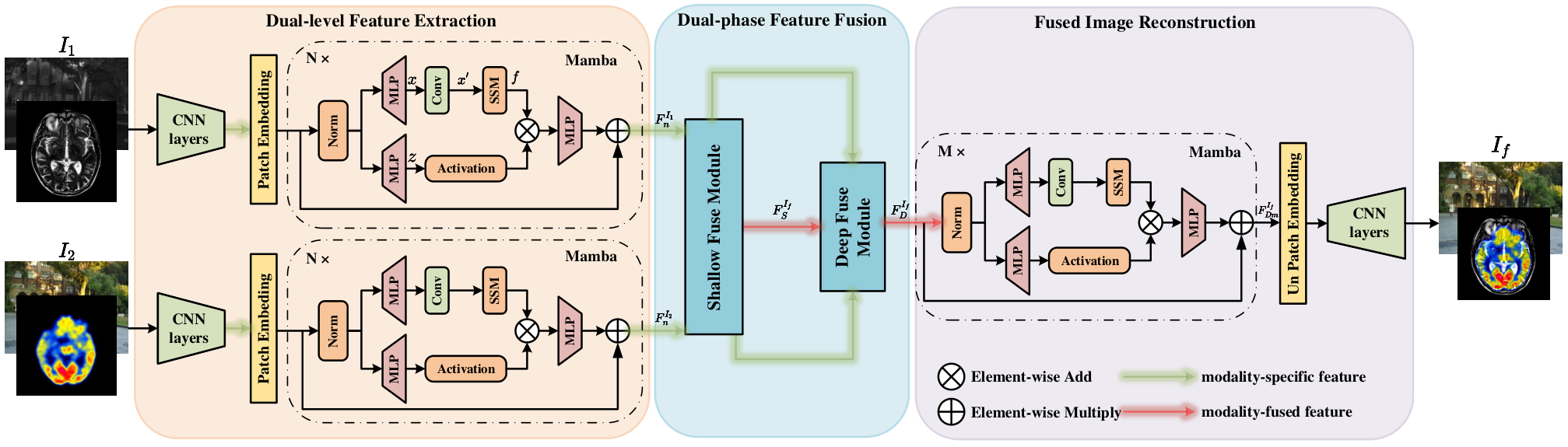
The architecture of MambaDFuse [93]. The system comprises three stages: dual-level feature extraction, dual-phase featur
Figure 11. The architecture of MambaDFuse [93]. The system comprises three stages: dual-level feature extraction, dual-phase feature fusion, and fused image reconstruction.

BibTeX

@article{heidari2024computationefficient,
  title   = {Computation-Efficient Era: A Comprehensive Survey of State Space Models in Medical Image Analysis},
  author  = {Heidari, Moein and Kolahi, Sina Ghorbani and Karimijafarbigloo, Sanaz and Azad, Bobby and Bozorgpour, Afshin and Hatami, Soheila and Azad, Reza and Diba, Ali and Bagci, Ulas and Merhof, Dorit},
  journal = {arXiv preprint arXiv:2406.03430},
  year    = {2024}
}